Your whole gas estate,
one supplier
Survey, design, finance, supply, installation, monitoring, billing, carbon reporting and maintenance. We deliver the project and then run it for you.
Gas is the utility nobody watches
Electricity gets sub-metered, analysed and reported. Gas usually gets a quarterly invoice and a shrug. By the time a figure looks wrong the consumption happened months ago, the boiler has been cycling all night since spring, and nobody can say which building or which tenant it belongs to.
Go Monitor closes that gap. We supply and install the meters, connect them to a network we own and operate, stream the readings into our cloud platform, produce the billing and carbon outputs, and keep the whole estate maintained and certified. One contract, one point of contact, one platform.
The whole puzzle, or just one piece of it
A gas metering project has a lot of pieces: the meters, the engineers, the network, the platform, the billing, the carbon figures and the money to pay for it. Some clients want the finished picture handed over. Others already have most of it in place, an energy management platform they like, a consultant they trust, a billing bureau that works, and need one piece that is missing. We are equally happy supplying the whole puzzle or the single piece that completes yours.
The whole picture
Every piece from Go Monitor: hardware, network, installation, platform, billing, carbon reporting and maintenance. One contract, one number to call, nothing left for you to join up.
The pieces you would rather not own
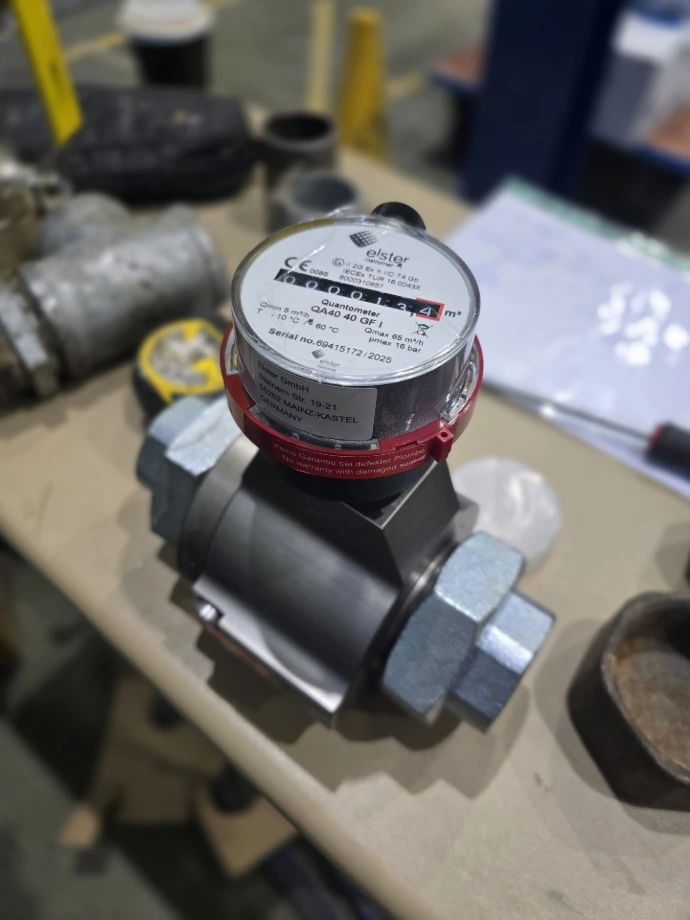
Metering as a Service. We own, deploy and maintain the meters, AMR modules and the network, and carry the risk on all of it for a service charge. You get the readings without owning a single device, a spare parts shelf or a network to look after. When something fails it is our problem and our cost.
The one piece you are missing
Keep the platform you already use. We deploy and run the hardware and network, then deliver a clean, reliable feed into your energy management, billing, BMS or reporting system through our API, with the fields and units mapped to what your system expects.
The piece that usually goes missing
Third party platforms are only as good as what reaches them, and most gas data arrives late, gapped or not at all because nobody owns the chain between the meter and the API call. We do. Device health, network coverage, gateway uptime and last reading time are monitored end to end, gaps are chased and backfilled where the meter supports it, and your system gets a consistent feed rather than a spreadsheet somebody emails over when they remember. Your data stays yours, and you can take it with you.
Seven stages, one team, no handoffs
Most gas metering projects are assembled from a meter supplier, an installer, a connectivity provider, a software vendor and a finance house. Every boundary between them is a delay, a cost and somebody else's problem. We do all of it in house, which is why our projects finish.
Survey
We walk the estate and record what is actually there: meter make, model, serial, size, badge index, certification date, pipework, pressure, location and signal strength at the meter. You get an asset register you can rely on, usually for the first time.
Design
Meters sized to real load rather than to the pipe, retrofit AMR where the existing meter is sound, replacement where it is not, and a network design that reaches every asset. You see the specification, the point count and the data plan before anything is ordered.
Finance
Take it as capital if that suits your budget, or spread it across a monthly or quarterly payment that bundles meters, modules, installation, platform, maintenance and warranty into one line. No large up front outlay, and a cost you can forecast.
Supply
We hold and source the meters, AMR modules, gateways and ancillaries, so you are not chasing three order books. Everything arrives pre-registered against the asset register and pre-provisioned on the network before it reaches site.
Install
Installation and commissioning by qualified gas engineers, with RAMS, permits and out of hours working where a shutdown is not an option. Every meter is proved on site, connected before the engineer leaves, and signed off with its commissioning record.
Monitor
Half-hourly to daily readings on the platform, with exception alerts by email, webhook or API. Billing, tenant recharge, budget tracking and carbon reporting all come off the same dataset, so the numbers agree with each other.
Maintain
Firmware patching, battery and signal health, proactive device swaps before a meter goes dark, and a certification diary that tells you which meters fall due next year. The estate stays compliant without you tracking it on a spreadsheet.
Send us your estate
A meter list, a supply point schedule or even a photo of the meter badge is enough for us to come back with a specification and an indicative cost.
What changes when it is one team
The fragmented route is not just slower, it is where the accountability leaks away. When the data stops arriving, nobody owns the problem.
Five suppliers
- Meter supplier, installer, connectivity provider, software vendor and funder, each with their own lead time
- Modules that arrive without the network provisioned, so a second visit is needed to commission
- Asset data in one place, readings in another, invoices in a third, none of them reconciling
- A dead meter becomes a three way conversation about whose fault it is
- Capital cost up front, maintenance and warranty priced separately later
Go Monitor
- One programme plan from survey to first reading, with one project manager answering for it
- Meters and modules provisioned on our network before they ship, so they connect on the day of install
- Asset register, readings, billing and carbon figures in one system, reconciled by design
- A device that stops reporting raises an alarm with us, and we deal with it
- One monthly or quarterly figure with maintenance and warranty already inside it
Every class, sized properly
Diaphragm meters from U6 through to U160 for boiler houses, kitchens and tenanted units. Rotary and turbine meters where flow rates, pressures or line sizes put a diaphragm out of its range. We size against the real load profile rather than the pipe diameter, because an oversized meter under-reads the small hours and an undersized one becomes a pressure complaint.
Where the existing meter is sound and within certification, a retrofit AMR module on the pulsed or index output gets you monitoring without touching the gas. Where it is not, replacement is quoted as part of the same programme.
Done once, done properly
Installation and commissioning is managed by us and carried out by qualified gas engineers, with risk assessments, method statements, permits to work and escorted access arranged ahead of the visit. Where a shutdown is unacceptable, and in hospitals and occupied housing it usually is, we work out of hours and phase the programme building by building.
Every install is proved and connected before the engineer leaves site. The reading appears on your dashboard that day, the asset register is updated with the new serial and certification date, and the commissioning record is filed against the asset rather than left in a van.
- RAMS, permits and site inductions handled before mobilisation
- Out of hours and phased programmes for live, occupied and critical sites
- Commissioned, connected and reading before the engineer signs off
- Asset register, serials and certification dates updated as built

A network built for meters in plant rooms
Gas meters sit in the worst places for radio: basements, brick risers, steel cupboards, locked plant rooms. We run two technologies so the meter location decides the answer, not the other way round, and we own and operate the network either way.

One place for readings, bills and alarms
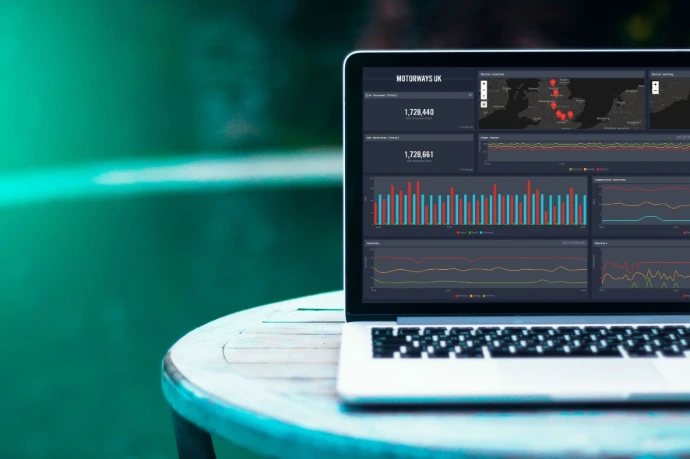
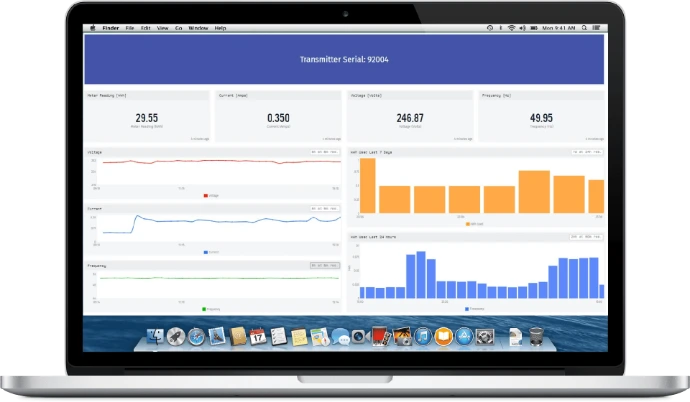
Your estate arranged the way you actually manage it: by portfolio, site, building, tenant, circuit or cost centre. Half-hourly to daily readings, with the exceptions pushed to you rather than waiting to be found.
- Alerts on load spikes, dormant meters, after hours consumption and budget thresholds
- Automated tenant billing and recharge reports on a schedule you set
- Exceptions delivered by email, webhook or API, so they reach your systems not just a screen
- REST API and scheduled exports for your CAFM, accounts or reporting stack
- Dashboards built for the audience: housing teams, site engineers, energy consultants and brokers
- White label options if you are presenting the data to your own clients
Meter exchange, planned not panicked
Gas meters carry a certification life, typically ten to twenty years depending on type and duty. Estates that have never tracked it tend to find out the hard way, in a cluster, in winter, with a billing dispute attached.
We survey the estate, build the register, then schedule exchanges on risk and expiry rather than all at once: oldest and highest consequence first, spread across budget years, bundled by site to keep engineer visits down. Replacements are commissioned and connected in the same visit, so a meter change becomes a monitoring upgrade rather than a cost with nothing to show for it.
Monitoring that is still working in year five
Metering projects do not fail at installation, they fail quietly eighteen months later when a battery dies, a gateway is unplugged by a contractor and nobody notices the readings stopped. Maintenance is part of the service, not an afterthought.
We watch the devices
Battery level, signal margin, gateway health and last reading time are monitored for every asset. A meter that goes quiet raises an alarm with our team, not with you.
Firmware kept current
Device and gateway firmware is patched by us as part of the service, so security fixes and reliability improvements land without a project being raised for them.
Proactive swaps
Devices nearing end of battery life are replaced before they stop, in a planned visit alongside other work on the same site, not as an emergency call out.
Warranty inside the price
Hardware warranty and replacement sit inside the agreed monthly or quarterly figure, so a failed module is not a fresh quotation and a purchase order.
One figure, everything inside it
A metering programme across an estate is a capital conversation most energy and estates teams would rather not have, and the delay while it goes through approval usually costs more than the project.
So we will fund it. Meters, AMR modules, gateways, installation, platform access, maintenance and warranty can all be wrapped into a single monthly or quarterly payment over an agreed term, replacing an up front capital ask with an operating cost you can forecast and defend. Where capital is available and preferred, we quote it that way too.
- No large up front outlay, and a cost that lands in the right budget line
- Maintenance, warranty and device replacement already included rather than priced later
- Scales by phase, so you can start with one site and extend on the same terms
Funding is subject to status and agreed terms. We will set out the options and the full cost of each before you commit.
What the payment covers
Numbers your report can actually use
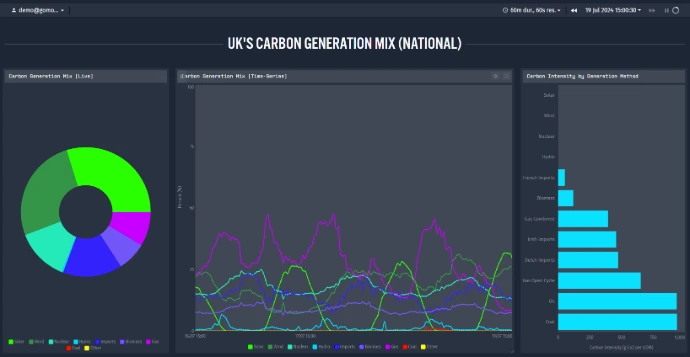
Gas is Scope 1, and it is usually the largest single line in a building's direct emissions. We convert metered kWh to CO2e using DESNZ conversion factors, or against live National Grid carbon intensity where you are comparing fuel switching and electrification options.
The figures come from the same meter readings as the bills, which means the carbon report and the invoice agree. View by portfolio, site or individual asset, export to CSV or PDF for SECR, ESOS and net zero reporting, or pull it through the API into whatever you already use. Scope 2 electricity, Scope 3 distribution losses, TM44 inspections and DEC support sit alongside it.
Estates where gas actually matters
Social housing
Communal boilers, district schemes and blocks where recharge has to be fair, defensible and explainable to residents. Metered data ends the apportionment argument.
Healthcare and NHS
Large boiler plant, critical ventilation and no tolerance for downtime. Phased, out of hours installation and estate wide visibility across multiple sites.
Industrial and manufacturing
Process gas against production output, line by line, so energy per unit becomes a number you can manage rather than an overhead you absorb.
Multi-let commercial
Tenant recharge, service charge transparency and landlord reporting from one dataset, with reports your tenants and auditors will accept.
The things people ask first
Do our existing gas meters have to be replaced?
Usually not. If the meter is within certification and has a usable pulsed or index output, a retrofit AMR module gets you monitoring without touching the gas supply. We confirm this at survey, meter by meter, and only recommend replacement where the meter is out of certification, wrongly sized or has no readable output.
How long does a project take?
A single site can be surveyed, installed and live within a few weeks. Larger estates are phased by building or region so work fits around access, budget years and your own programmes. You get a dated plan after survey, and the readings start arriving as each phase commissions rather than at the end.
Does this need anything from our IT team?
No. The meters talk to our own LoRaWAN network or over NB-IoT, not to your corporate network, so there is no firewall change, no VLAN and no device onboarding on your side. If you would rather pull the data into your own systems, that is a REST API call or a scheduled export.
Can you bill our tenants from this?
Yes. The platform produces tenant billing and recharge reports on the schedule you set, from the same metered readings used for your own reporting. Some clients take the reports and bill themselves, others have us produce the figures for their managing agent. White label output is available either way.
What happens if a meter stops reporting?
We see it before you do. Last reading time, battery level and signal margin are monitored for every device, and a gap raises an alarm with our team. Diagnosis, firmware, module replacement and the site visit are covered within the service, so there is no separate fault ticket to raise or pay for.
Can we start small and expand?
Yes, and most clients do. A first site proves the data, the reporting and the process, and the gateway that covers it usually has capacity for the electricity, heat, water and sensor points that follow. Later phases extend on the same commercial terms rather than being priced from scratch.
Talk to us about your gas metering estate
Send us a meter list, a supply point schedule or just tell us how many buildings you have. We will come back with what is possible, what it involves and what it costs.
Your whole gas estate,
one supplier
Survey, design, finance, supply, installation, monitoring, billing, carbon reporting and maintenance. We deliver the project and then run it for you.
Gas is the utility nobody watches
Electricity gets sub-metered, analysed and reported. Gas usually gets a quarterly invoice and a shrug. By the time a figure looks wrong the consumption happened months ago, the boiler has been cycling all night since spring, and nobody can say which building or which tenant it belongs to.
Go Monitor closes that gap. We supply and install the meters, connect them to a network we own and operate, stream the readings into our cloud platform, produce the billing and carbon outputs, and keep the whole estate maintained and certified. One contract, one point of contact, one platform.
The whole puzzle, or just one piece of it
A gas metering project has a lot of pieces: the meters, the engineers, the network, the platform, the billing, the carbon figures and the money to pay for it. Some clients want the finished picture handed over. Others already have most of it in place, an energy management platform they like, a consultant they trust, a billing bureau that works, and need one piece that is missing. We are equally happy supplying the whole puzzle or the single piece that completes yours.
The whole picture
Every piece from Go Monitor: hardware, network, installation, platform, billing, carbon reporting and maintenance. One contract, one number to call, nothing left for you to join up.
The pieces you would rather not own
Metering as a Service. We own, deploy and maintain the meters, AMR modules and the network, and carry the risk on all of it for a service charge. You get the readings without owning a single device, a spare parts shelf or a network to look after. When something fails it is our problem and our cost.
The one piece you are missing
Keep the platform you already use. We deploy and run the hardware and network, then deliver a clean, reliable feed into your energy management, billing, BMS or reporting system through our API, with the fields and units mapped to what your system expects.
The piece that usually goes missing
Third party platforms are only as good as what reaches them, and most gas data arrives late, gapped or not at all because nobody owns the chain between the meter and the API call. We do. Device health, network coverage, gateway uptime and last reading time are monitored end to end, gaps are chased and backfilled where the meter supports it, and your system gets a consistent feed rather than a spreadsheet somebody emails over when they remember. Your data stays yours, and you can take it with you.
Seven stages, one team, no handoffs
Most gas metering projects are assembled from a meter supplier, an installer, a connectivity provider, a software vendor and a finance house. Every boundary between them is a delay, a cost and somebody else's problem. We do all of it in house, which is why our projects finish.
Survey
We walk the estate and record what is actually there: meter make, model, serial, size, badge index, certification date, pipework, pressure, location and signal strength at the meter. You get an asset register you can rely on, usually for the first time.
Design
Meters sized to real load rather than to the pipe, retrofit AMR where the existing meter is sound, replacement where it is not, and a network design that reaches every asset. You see the specification, the point count and the data plan before anything is ordered.
Finance
Take it as capital if that suits your budget, or spread it across a monthly or quarterly payment that bundles meters, modules, installation, platform, maintenance and warranty into one line. No large up front outlay, and a cost you can forecast.
Supply
We hold and source the meters, AMR modules, gateways and ancillaries, so you are not chasing three order books. Everything arrives pre-registered against the asset register and pre-provisioned on the network before it reaches site.
Install
Installation and commissioning by qualified gas engineers, with RAMS, permits and out of hours working where a shutdown is not an option. Every meter is proved on site, connected before the engineer leaves, and signed off with its commissioning record.
Monitor
Half-hourly to daily readings on the platform, with exception alerts by email, webhook or API. Billing, tenant recharge, budget tracking and carbon reporting all come off the same dataset, so the numbers agree with each other.
Maintain
Firmware patching, battery and signal health, proactive device swaps before a meter goes dark, and a certification diary that tells you which meters fall due next year. The estate stays compliant without you tracking it on a spreadsheet.
Send us your estate
A meter list, a supply point schedule or even a photo of the meter badge is enough for us to come back with a specification and an indicative cost.
What changes when it is one team
The fragmented route is not just slower, it is where the accountability leaks away. When the data stops arriving, nobody owns the problem.
Five suppliers
- Meter supplier, installer, connectivity provider, software vendor and funder, each with their own lead time
- Modules that arrive without the network provisioned, so a second visit is needed to commission
- Asset data in one place, readings in another, invoices in a third, none of them reconciling
- A dead meter becomes a three way conversation about whose fault it is
- Capital cost up front, maintenance and warranty priced separately later
Go Monitor
- One programme plan from survey to first reading, with one project manager answering for it
- Meters and modules provisioned on our network before they ship, so they connect on the day of install
- Asset register, readings, billing and carbon figures in one system, reconciled by design
- A device that stops reporting raises an alarm with us, and we deal with it
- One monthly or quarterly figure with maintenance and warranty already inside it
Every class, sized properly
Diaphragm meters from U6 through to U160 for boiler houses, kitchens and tenanted units. Rotary and turbine meters where flow rates, pressures or line sizes put a diaphragm out of its range. We size against the real load profile rather than the pipe diameter, because an oversized meter under-reads the small hours and an undersized one becomes a pressure complaint.
Where the existing meter is sound and within certification, a retrofit AMR module on the pulsed or index output gets you monitoring without touching the gas. Where it is not, replacement is quoted as part of the same programme.
Done once, done properly
Installation and commissioning is managed by us and carried out by qualified gas engineers, with risk assessments, method statements, permits to work and escorted access arranged ahead of the visit. Where a shutdown is unacceptable, and in hospitals and occupied housing it usually is, we work out of hours and phase the programme building by building.
Every install is proved and connected before the engineer leaves site. The reading appears on your dashboard that day, the asset register is updated with the new serial and certification date, and the commissioning record is filed against the asset rather than left in a van.
- RAMS, permits and site inductions handled before mobilisation
- Out of hours and phased programmes for live, occupied and critical sites
- Commissioned, connected and reading before the engineer signs off
- Asset register, serials and certification dates updated as built
A network built for meters in plant rooms
Gas meters sit in the worst places for radio: basements, brick risers, steel cupboards, locked plant rooms. We run two technologies so the meter location decides the answer, not the other way round, and we own and operate the network either way.
One place for readings, bills and alarms
Your estate arranged the way you actually manage it: by portfolio, site, building, tenant, circuit or cost centre. Half-hourly to daily readings, with the exceptions pushed to you rather than waiting to be found.
- Alerts on load spikes, dormant meters, after hours consumption and budget thresholds
- Automated tenant billing and recharge reports on a schedule you set
- Exceptions delivered by email, webhook or API, so they reach your systems not just a screen
- REST API and scheduled exports for your CAFM, accounts or reporting stack
- Dashboards built for the audience: housing teams, site engineers, energy consultants and brokers
- White label options if you are presenting the data to your own clients
Meter exchange, planned not panicked
Gas meters carry a certification life, typically ten to twenty years depending on type and duty. Estates that have never tracked it tend to find out the hard way, in a cluster, in winter, with a billing dispute attached.
We survey the estate, build the register, then schedule exchanges on risk and expiry rather than all at once: oldest and highest consequence first, spread across budget years, bundled by site to keep engineer visits down. Replacements are commissioned and connected in the same visit, so a meter change becomes a monitoring upgrade rather than a cost with nothing to show for it.
Monitoring that is still working in year five
Metering projects do not fail at installation, they fail quietly eighteen months later when a battery dies, a gateway is unplugged by a contractor and nobody notices the readings stopped. Maintenance is part of the service, not an afterthought.
We watch the devices
Battery level, signal margin, gateway health and last reading time are monitored for every asset. A meter that goes quiet raises an alarm with our team, not with you.
Firmware kept current
Device and gateway firmware is patched by us as part of the service, so security fixes and reliability improvements land without a project being raised for them.
Proactive swaps
Devices nearing end of battery life are replaced before they stop, in a planned visit alongside other work on the same site, not as an emergency call out.
Warranty inside the price
Hardware warranty and replacement sit inside the agreed monthly or quarterly figure, so a failed module is not a fresh quotation and a purchase order.
One figure, everything inside it
A metering programme across an estate is a capital conversation most energy and estates teams would rather not have, and the delay while it goes through approval usually costs more than the project.
So we will fund it. Meters, AMR modules, gateways, installation, platform access, maintenance and warranty can all be wrapped into a single monthly or quarterly payment over an agreed term, replacing an up front capital ask with an operating cost you can forecast and defend. Where capital is available and preferred, we quote it that way too.
- No large up front outlay, and a cost that lands in the right budget line
- Maintenance, warranty and device replacement already included rather than priced later
- Scales by phase, so you can start with one site and extend on the same terms
Funding is subject to status and agreed terms. We will set out the options and the full cost of each before you commit.
What the payment covers
Numbers your report can actually use
Gas is Scope 1, and it is usually the largest single line in a building's direct emissions. We convert metered kWh to CO2e using DESNZ conversion factors, or against live National Grid carbon intensity where you are comparing fuel switching and electrification options.
The figures come from the same meter readings as the bills, which means the carbon report and the invoice agree. View by portfolio, site or individual asset, export to CSV or PDF for SECR, ESOS and net zero reporting, or pull it through the API into whatever you already use. Scope 2 electricity, Scope 3 distribution losses, TM44 inspections and DEC support sit alongside it.
Estates where gas actually matters
Social housing
Communal boilers, district schemes and blocks where recharge has to be fair, defensible and explainable to residents. Metered data ends the apportionment argument.
Healthcare and NHS
Large boiler plant, critical ventilation and no tolerance for downtime. Phased, out of hours installation and estate wide visibility across multiple sites.
Industrial and manufacturing
Process gas against production output, line by line, so energy per unit becomes a number you can manage rather than an overhead you absorb.
Multi-let commercial
Tenant recharge, service charge transparency and landlord reporting from one dataset, with reports your tenants and auditors will accept.
The things people ask first
Do our existing gas meters have to be replaced?
Usually not. If the meter is within certification and has a usable pulsed or index output, a retrofit AMR module gets you monitoring without touching the gas supply. We confirm this at survey, meter by meter, and only recommend replacement where the meter is out of certification, wrongly sized or has no readable output.
How long does a project take?
A single site can be surveyed, installed and live within a few weeks. Larger estates are phased by building or region so work fits around access, budget years and your own programmes. You get a dated plan after survey, and the readings start arriving as each phase commissions rather than at the end.
Does this need anything from our IT team?
No. The meters talk to our own LoRaWAN network or over NB-IoT, not to your corporate network, so there is no firewall change, no VLAN and no device onboarding on your side. If you would rather pull the data into your own systems, that is a REST API call or a scheduled export.
Can you bill our tenants from this?
Yes. The platform produces tenant billing and recharge reports on the schedule you set, from the same metered readings used for your own reporting. Some clients take the reports and bill themselves, others have us produce the figures for their managing agent. White label output is available either way.
What happens if a meter stops reporting?
We see it before you do. Last reading time, battery level and signal margin are monitored for every device, and a gap raises an alarm with our team. Diagnosis, firmware, module replacement and the site visit are covered within the service, so there is no separate fault ticket to raise or pay for.
Can we start small and expand?
Yes, and most clients do. A first site proves the data, the reporting and the process, and the gateway that covers it usually has capacity for the electricity, heat, water and sensor points that follow. Later phases extend on the same commercial terms rather than being priced from scratch.
Talk to us about your gas metering estate
Send us a meter list, a supply point schedule or just tell us how many buildings you have. We will come back with what is possible, what it involves and what it costs.